
AI Overview
Dandruff is common, but persistent flakes, itching, redness, thick scales, or hair loss may indicate another scalp condition. A dermatologist can identify the cause and recommend the right treatment.
Dandruff or Scalp Condition? When Should You See a Dermatologist?
Dandruff is a common scalp concern that can cause white flakes, itching, dryness, and irritation. In many cases, mild dandruff can be managed with proper scalp care and a suitable anti dandruff shampoo. However, persistent flaking does not always mean you have simple dandruff. Other scalp conditions can cause similar symptoms and may require professional treatment.
Knowing when dandruff needs medical attention can help you avoid ineffective treatments and prevent the condition from becoming more severe. If your scalp symptoms continue despite regular care, a consultation with a qualified dermatologist in Kanpur can help identify the underlying cause and provide an appropriate treatment plan.
What Is Dandruff?
Dandruff occurs when the scalp sheds dead skin cells more quickly than usual. It can be associated with excess oil production, scalp sensitivity, or the natural presence of Malassezia yeast on the scalp.
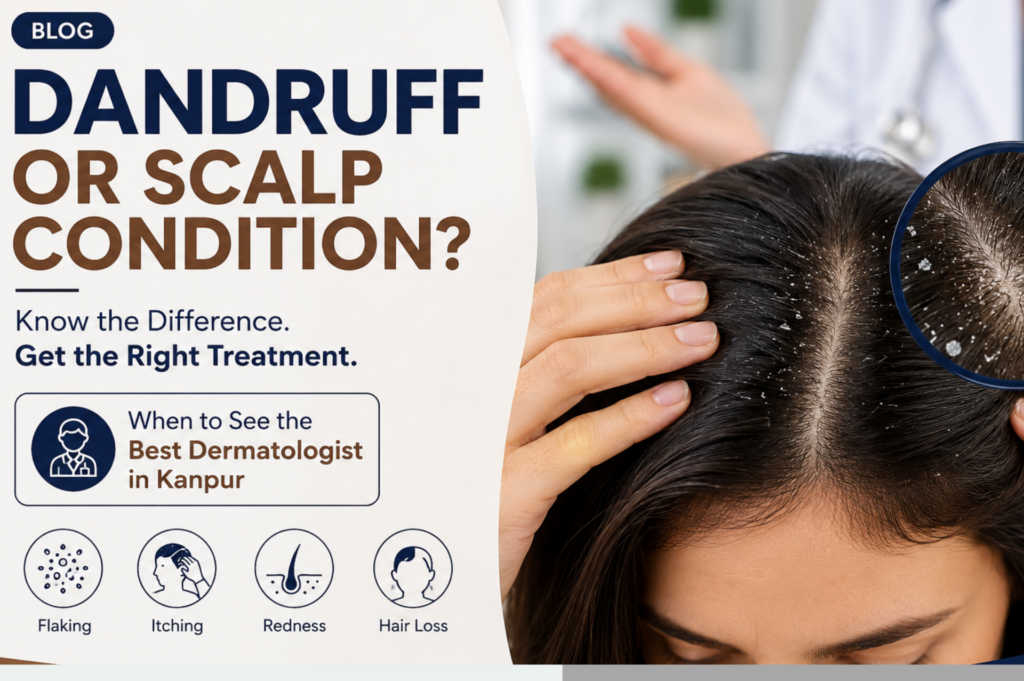
Common signs of dandruff include:
- White or yellowish flakes
- Mild scalp itching
- Dry or oily scalp
- Visible flakes on hair or clothing
- Occasional scalp irritation
Dandruff may become more noticeable during seasonal changes, stress, or when the scalp becomes excessively oily or dry.
Although dandruff is generally not considered a serious condition, persistent symptoms should be evaluated if they do not improve with basic scalp care.
Could It Be Another Scalp Condition?
Several scalp conditions can look similar to dandruff. Identifying the actual cause is important because different conditions require different treatments.
Seborrheic Dermatitis
Seborrheic dermatitis can cause persistent flakes, redness, itching, and greasy scales on the scalp. It may also affect areas such as the eyebrows, ears, beard, and sides of the nose.
Unlike mild dandruff, seborrheic dermatitis may require medicated shampoos or prescription treatments to control inflammation and recurring symptoms.
Scalp Psoriasis
Scalp psoriasis can cause thick, well defined patches with silvery scales. The affected areas may extend beyond the hairline and can be associated with considerable itching or discomfort.
Because psoriasis can sometimes resemble severe dandruff, a professional examination can help distinguish between the two conditions.
Fungal Scalp Infection
Fungal infections can cause scaling, itching, redness, and patches of hair loss. Some infections may spread and require prescription antifungal medication.
If you notice scaling along with broken hairs, circular patches, swelling, or noticeable hair loss, medical evaluation is recommended.
Contact Dermatitis
Hair dyes, shampoos, conditioners, oils, and styling products can sometimes irritate the scalp or trigger an allergic reaction. Contact dermatitis may cause itching, burning, redness, swelling, and scaling.
If symptoms started after using a new hair product, it may be contributing to the problem.
When Should You See a Dermatologist?
Mild dandruff does not always require a medical consultation. However, certain symptoms indicate that professional evaluation may be necessary.
Persistent Flaking
If dandruff continues for several weeks despite using an appropriate anti dandruff shampoo, there may be another underlying cause. A dermatologist can examine your scalp and recommend suitable treatment.
Severe Itching or Redness
Mild itching is common with dandruff, but intense itching, burning, tenderness, or persistent redness should not be ignored. These symptoms may indicate inflammation or infection.
Hair Loss
Significant hair loss along with scalp flaking can be a warning sign of an underlying scalp condition. Frequent scratching may also cause hair breakage and temporary shedding.
If you notice bald patches or increased hair fall with scaling, it is better to seek professional advice.
Thick Scales or Crusting
Thick scales, crusting, bleeding, or painful areas are not typical signs of mild dandruff. These symptoms may occur with psoriasis, severe dermatitis, or certain infections.
Symptoms Affecting Other Areas
If flaking or irritation also affects your eyebrows, ears, beard, or face, the condition may require a more detailed assessment.
How Is a Scalp Condition Diagnosed?
A dermatologist generally starts with a visual examination of the scalp. They may ask about how long you have experienced symptoms, previous treatments, hair products, and associated concerns such as itching or hair loss.
Depending on the symptoms, additional examination or testing may sometimes be required. This helps differentiate dandruff from conditions such as psoriasis, seborrheic dermatitis, or fungal infections.
Getting the correct diagnosis is important because treatment varies from one scalp condition to another.
Treatment Options for Dandruff and Scalp Conditions
Treatment depends on the cause and severity of the problem. Mild dandruff may improve with an appropriate medicated shampoo containing ingredients designed to reduce flakes and control scalp microorganisms.
Persistent or severe conditions may require prescription shampoos, topical medications, antifungal treatments, or other targeted therapies. A dermatologist can recommend the right option based on your scalp condition.
For individuals looking for dandruff treatment in Kanpur, professional assessment can be useful when standard anti dandruff products are not providing adequate relief.
Healthy Scalp Care Tips
Good scalp care can help reduce irritation and support treatment.
- Wash your scalp regularly according to your scalp type.
- Use an anti dandruff shampoo as recommended.
- Avoid scratching the scalp excessively.
- Rinse shampoo and styling products thoroughly.
- Avoid frequently switching between multiple hair products.
- Keep combs and brushes clean.
- Avoid irritating products when the scalp is inflamed.
- Follow your dermatologist’s treatment instructions consistently.
Why Early Treatment Matters
Persistent scalp problems should not be ignored. Delaying treatment can allow inflammation or infection to continue and may make symptoms more difficult to control.
Early professional evaluation can help determine whether you are dealing with ordinary dandruff or another scalp condition. It can also prevent unnecessary experimentation with different shampoos and home remedies.
If you are experiencing recurring scalp problems, professional scalp treatment in Kanpur can help identify the underlying cause and guide you toward appropriate care.
Conclusion
Dandruff is common and often manageable, but persistent flaking may sometimes indicate an underlying scalp condition. Seborrheic dermatitis, scalp psoriasis, fungal infections, and contact dermatitis can produce symptoms similar to dandruff but require different approaches.
If you experience persistent flakes, severe itching, redness, thick scales, sores, or hair loss, consider consulting a dermatologist. At Dermatrichs, professional evaluation can help determine whether your symptoms are caused by dandruff or another scalp condition and help you choose an appropriate treatment approach.
With timely diagnosis, proper scalp care, and suitable treatment, many common scalp conditions can be effectively managed.
