
AI Overview
Dark spots, acne, and uneven skin tone are common skin concerns caused by factors such as sun exposure, acne marks, hormonal changes, and inflammation. Persistent or worsening pigmentation and acne may require professional evaluation. Dermatrichs offers personalized skin care guidance and treatment options in Kanpur.
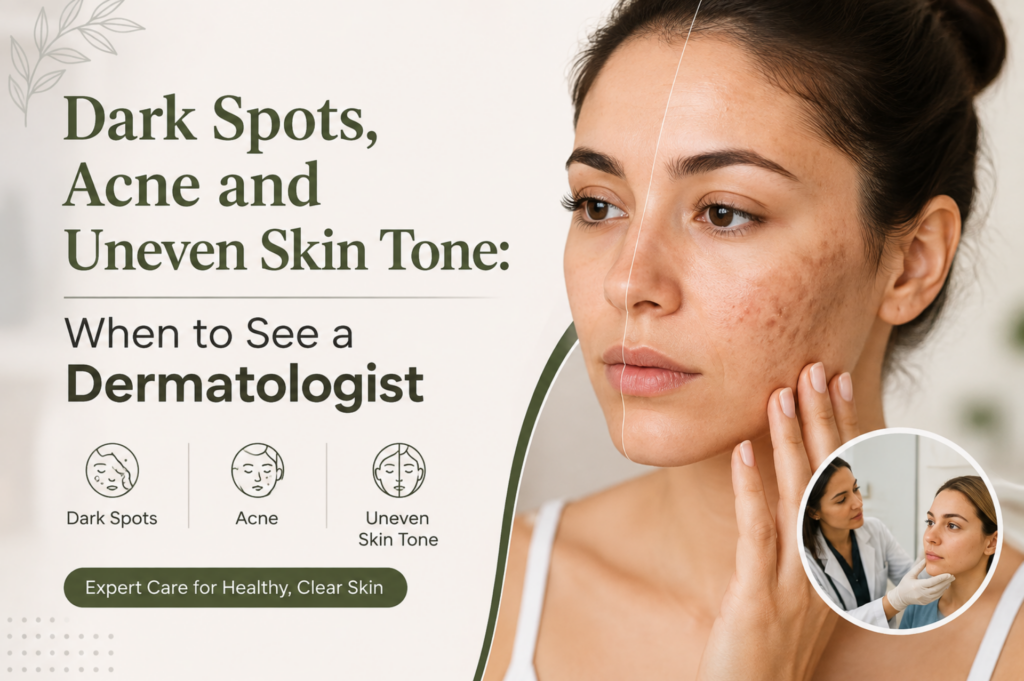
Dark Spots, Acne and Uneven Skin Tone: When to See a Dermatologist
Dark spots, acne and uneven skin tone are common skin concerns that can affect people of all ages. Occasional pimples or mild pigmentation may improve with a good skincare routine, but persistent or worsening concerns may require professional attention. Understanding the causes and knowing when to consult a skin expert can help prevent long term pigmentation, acne marks and scarring.
What Causes Dark Spots and Uneven Skin Tone?
Dark spots develop when certain areas of the skin produce more melanin than usual. Common causes include acne, sun exposure, hormonal changes, inflammation and skin irritation.
Post inflammatory hyperpigmentation is one of the most common reasons for dark marks. It can develop after acne, cuts, insect bites or other forms of skin inflammation. These marks may remain even after the original skin problem has healed.
Sun exposure is another important factor. Ultraviolet rays can stimulate melanin production and make existing pigmentation darker. Hormonal changes can also contribute to conditions such as melasma, which often appears as brown or greyish patches on the face.
Why Does Acne Leave Dark Marks?
Acne can leave dark spots after pimples have healed. When acne becomes inflamed, the skin may produce additional pigment during the healing process. This can cause marks that remain for several weeks or months.
Picking or squeezing pimples can increase inflammation and make pigmentation worse. It can also increase the risk of permanent acne scars. Treating acne early and avoiding unnecessary irritation can help protect the skin.
If you are experiencing persistent breakouts, professional acne treatment in Kanpur can help identify the type of acne and determine an appropriate treatment approach.
When Should You See a Dermatologist for Acne?
Mild acne may sometimes be managed with suitable skincare products. However, professional advice may be helpful if acne does not improve with consistent skincare or if breakouts become more severe.
You should consider a consultation if:
- Pimples are painful, deep or inflamed
- Acne continues for several months
- Breakouts frequently return
- Acne leaves dark spots or scars
- Pimples appear regularly on the face, chest or back
- Skincare products cause irritation
- Acne affects your confidence or daily life
A professional can determine the type and severity of acne and recommend suitable treatment. Depending on the condition, options may include topical medicines, oral medications, chemical peels and other dermatological procedures.
When Should Dark Spots Be Evaluated?
Not every dark spot requires medical treatment, but persistent pigmentation should not always be treated with random products. If dark spots continue to develop, become darker or fail to improve despite proper skincare, professional evaluation may be beneficial.
A Dermatologist in Kanpur can assess your skin and determine whether the pigmentation is related to acne marks, sun exposure, melasma, hormonal changes or another skin condition.
Professional diagnosis is particularly important when pigmentation develops suddenly or changes noticeably. Identifying the cause first helps ensure that the treatment is appropriate.
How Does Sun Exposure Affect Skin Tone?
Sun exposure can significantly contribute to uneven pigmentation. Repeated ultraviolet exposure stimulates melanin production, which can make dark spots more visible. It can also contribute to premature skin ageing.
Using sunscreen regularly is therefore an important part of managing pigmentation. A broad spectrum sunscreen suitable for your skin type can help protect against ultraviolet radiation. Wearing a hat, using an umbrella and seeking shade can provide additional protection outdoors.
If pigmentation has already developed, a professional may recommend appropriate pigmentation treatment based on the type and severity of the condition.
Can Skincare Products Improve Acne and Pigmentation?
A consistent skincare routine can support healthier looking skin. Ingredients such as niacinamide, vitamin C, retinoids and exfoliating acids are commonly used to manage acne and pigmentation.
However, using too many active ingredients can irritate the skin. Excessive exfoliation may weaken the skin barrier and increase redness or pigmentation.
A Skin Specialist in Kanpur can help you select suitable skincare products according to your skin type and specific concerns. Professional guidance can also help reduce unnecessary experimentation with different products.
Treatment Options for Acne and Dark Spots
Treatment depends on the underlying cause, skin type and severity of the concern. Acne may be treated with topical or oral medicines, chemical peels and selected dermatological procedures.
For dark spots and uneven pigmentation, treatment options may include prescription creams, chemical peels, laser based procedures and other treatments recommended after a proper skin assessment.
The right dark spots treatment depends on what is causing the pigmentation. Treating acne related marks may require a different approach from treating melasma or sun related pigmentation.
At Dermatrichs, treatment recommendations can be tailored according to individual skin concerns and requirements. A personalized approach is important because different skin conditions may require different treatment methods.
Why Early Treatment Matters
Persistent acne can increase the risk of dark marks and permanent scarring. Similarly, repeatedly using unsuitable products for pigmentation can cause irritation and make the skin harder to manage.
Seeking professional guidance early can help identify the cause of the problem and establish a suitable treatment plan. It can also reduce unnecessary experimentation with home remedies and skincare products.
Early attention can be particularly helpful when acne and pigmentation occur together. Managing active acne while addressing existing marks can help improve the overall appearance and health of the skin.
When to Seek Professional Skin Care
Persistent acne, dark spots or uneven skin tone may need professional evaluation. If your skin does not improve with regular skincare, a personalized assessment can help identify the cause and guide suitable treatment.
With proper diagnosis, consistent care and the right treatment approach, these concerns can be managed effectively.
