
AI Overview
Dark lips can be caused by sun exposure, smoking, dryness, irritation, hormonal changes, or certain medications. Treatment depends on the underlying cause and may include proper lip care, sun protection, topical treatments, chemical peels, or laser therapy. A dermatologist can assess the pigmentation and recommend a safe, personalised treatment plan.
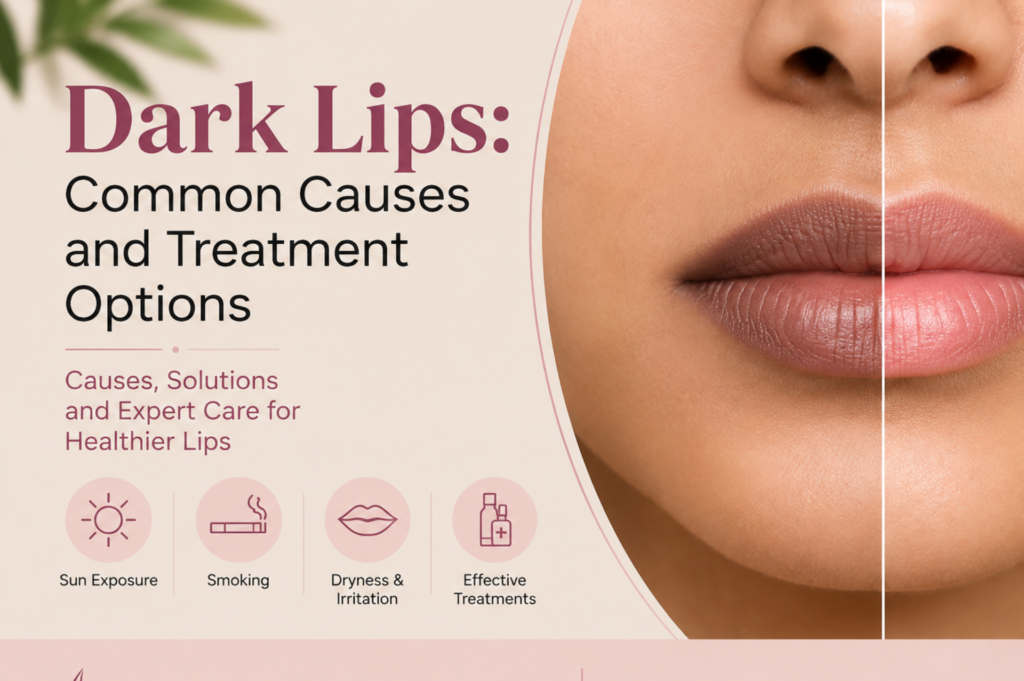
Dark Lips: Common Causes and Treatment Options
Dark lips are a common concern that can affect people of different ages and skin types. While naturally darker lips are completely normal, a noticeable change in lip colour can sometimes be caused by sun exposure, smoking, dryness, irritation, or other factors. Understanding the cause is important because the right treatment depends on what is contributing to the pigmentation.
At Dermatrichs, professional skin and pigmentation care focuses on understanding the underlying cause before recommending a suitable treatment. With proper evaluation and personalised care, persistent lip pigmentation can often be managed safely and effectively.
What Causes Dark Lips?
1. Sun Exposure
Regular exposure to sunlight can increase melanin production in the lips, gradually making them appear darker. Using a lip balm with suitable sun protection can help prevent further pigmentation.
2. Smoking and Tobacco
Smoking and tobacco use can contribute to darker lips over time. Chemicals and repeated smoke exposure may stimulate pigmentation and affect overall lip health.
3. Dry and Chapped Lips
Dryness can make lips look dull and darker. Frequent licking, biting, or peeling can also cause irritation and may contribute to pigmentation.
4. Lip Product Irritation
Certain lipsticks, balms, toothpaste ingredients, or cosmetics may irritate sensitive lips. Repeated irritation can sometimes result in darker pigmentation.
5. Hormonal Changes
Hormonal fluctuations can influence melanin production in some individuals. If pigmentation develops along with other unexplained changes, professional evaluation may be helpful.
6. Certain Medications
Some medications can cause pigmentation as a side effect. If lip darkening begins after starting a new medicine, discuss it with your doctor rather than stopping the medication yourself.
7. Skin Conditions
Certain skin conditions can cause pigmentation on or around the lips. A dermatologist can examine the area and identify whether an underlying condition needs treatment.
Treatment Options for Dark Lips
The suitable treatment depends on the cause, severity, skin type, and overall condition of the lips.
1. Lip Care and Moisturisation
For mild pigmentation related to dryness or irritation, regular moisturisation may help restore healthier looking lips and reduce further irritation.
2. Sun Protection
Using an SPF lip balm can protect the delicate lip skin from UV exposure and help prevent existing pigmentation from becoming darker.
3. Topical Treatments
A dermatologist may recommend suitable topical products to help manage pigmentation. Since lip skin is sensitive, these products should be used according to professional guidance.
4. Chemical Peels
Mild chemical peels may be suitable for selected cases. They help support controlled exfoliation and may improve uneven pigmentation when performed professionally.
5. Laser Treatment
Laser treatment may be considered for certain types of persistent pigmentation. It targets excess pigment and may help improve the overall appearance of the lips over a series of sessions.
6. Treating the Underlying Cause
Removing the trigger is an important part of treatment. This may involve avoiding irritating products, improving sun protection, stopping tobacco use, or treating an underlying skin condition.
Can Home Remedies Lighten Dark Lips?
Home remedies such as lemon, baking soda, or harsh sugar scrubs are often promoted for lightening dark lips. However, these ingredients may irritate delicate lip skin and can sometimes make pigmentation worse.
Gentle moisturisation, sun protection, and avoiding irritating habits are safer approaches. Persistent pigmentation should be assessed by a qualified dermatologist.
How to Prevent Dark Lips
You should consider seeing a dermatologist if lip pigmentation is persistent, becomes darker, spreads, or develops without an obvious reason. Professional evaluation is especially important if pigmentation is accompanied by pain, itching, swelling, sores, or bleeding.
A dermatologist can identify possible causes and recommend a suitable treatment plan based on your individual needs.
Professional Treatment for Dark Lips
If you are searching for lip pigmentation treatment in Kanpur, professional assessment can help determine the most appropriate approach. Treatment may vary depending on whether pigmentation is caused by sun exposure, lifestyle habits, irritation, dryness, or another condition.
At Dermatrichs, treatment options are considered after evaluating the lips and understanding the factors contributing to pigmentation. For individuals considering laser treatment for pigmentation in Kanpur, a dermatologist can determine whether laser treatment is appropriate or whether another option would be more suitable.
Final Thoughts
Dark lips can result from several factors, including sun exposure, tobacco use, dryness, irritation, and certain skin conditions. Gentle lip care and sun protection can help, while persistent pigmentation may require dermatologistguided treatment.
Concerned about dark or pigmented lips? Contact Dermatrichs to discuss your concerns and get professional guidance on suitable pigmentation treatment options. A personalised consultation can help you understand the cause of your lip pigmentation and choose an appropriate treatment plan.
